How a Luthier Matches a Violin to Your Playing
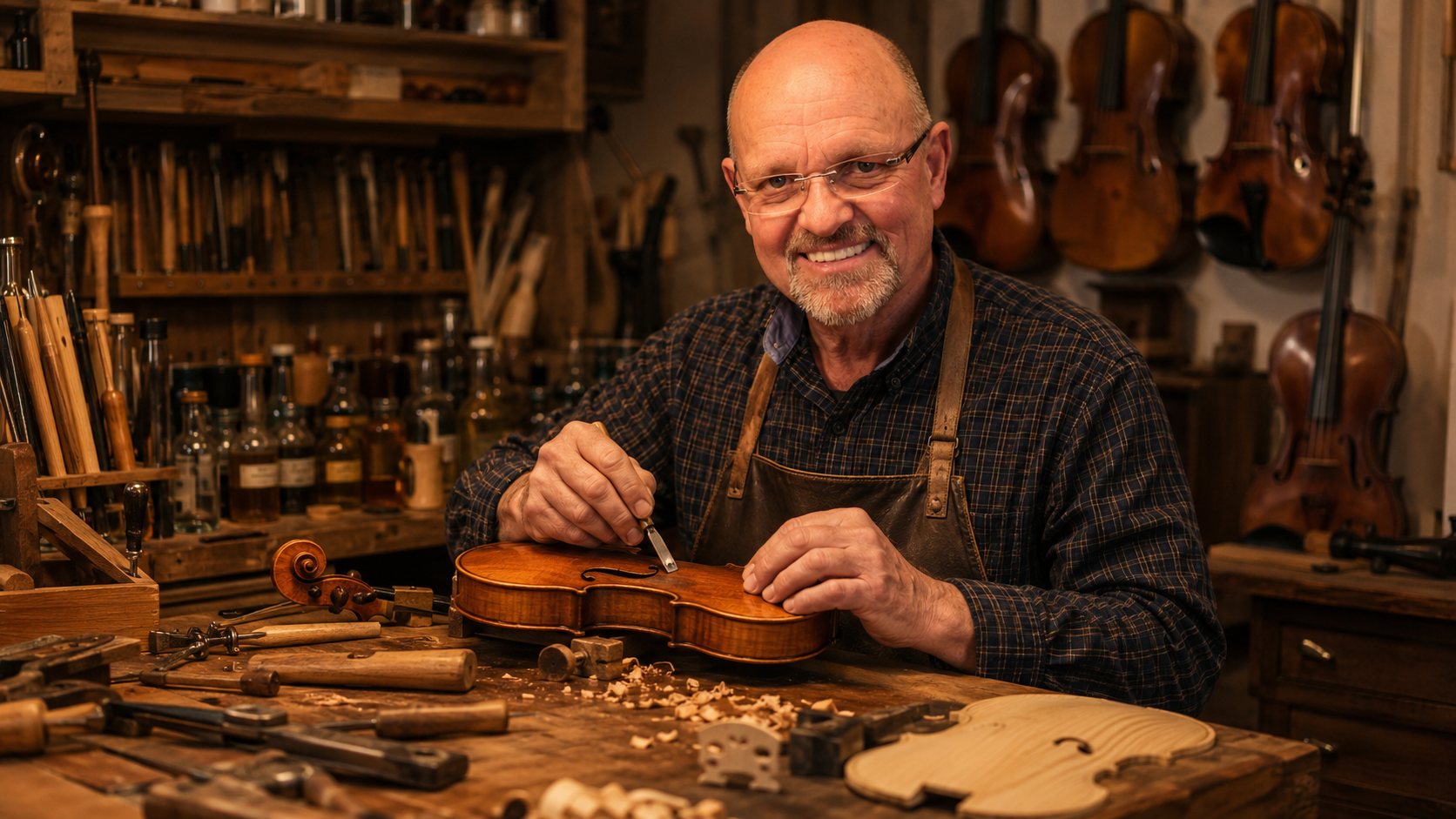
You have been playing for years. Your technique is real, your ear is developed, and you know what you want to sound like. But every time you sit down with your current instrument, something between the bow and the listener goes missing. You have adjusted strings, tried a new bow, even had the bridge looked at. The violin is not broken. It is simply not yours.
This is the experience that drives serious players to search for a luthier who can do more than tune a setup. It is the search for someone who can match an instrument to the way you actually play.
Setup Adjustment and Instrument Matching Are Not the Same Thing
Most violin shops and many luthiers offer setup work. Bridge shaping, soundpost positioning, string selection, nut height, string clearance. These are real and meaningful services. A well-executed setup can unlock a surprising amount of tone from an instrument that has been neglected or fitted with the wrong components.
But setup adjustment answers a different question than instrument matching. Setup asks: is this violin performing at its potential? Instrument matching asks: is this violin the right expressive tool for this specific player?
A violin can be perfectly set up and still be the wrong instrument for your voice.
For a serious amateur, advanced student, or professional violinist, the distinction matters enormously. You are not looking for a violin that works. You are looking for a violin that responds to your bow pressure, your contact point, your tonal palette, your musical intentions. A luthier who can do that is not adjusting an instrument. They are entering into a conversation with a musician.
What 'Matching' Actually Involves
When a master luthier matches a violin to a player, several things happen that a standard setup visit does not address.
First, the luthier listens. Not to the violin. To you. What register do you favor? How do you use the bow at pianissimo? Do you need a quick, articulate response for chamber work, or a broader, more sustained projection for solo performance? Is your current instrument resisting you in the upper positions, or losing color in the lower strings?
Second, the luthier evaluates the instrument's tonal architecture. A handcrafted violin is not a fixed object. The arching, the plate thicknesses, the graduation, the wood selection, the varnish, the bass bar, and the soundpost all contribute to how the instrument responds to a specific player's technique. A luthier who builds instruments from the ground up understands these relationships in a way that a repair technician, however skilled, may not.
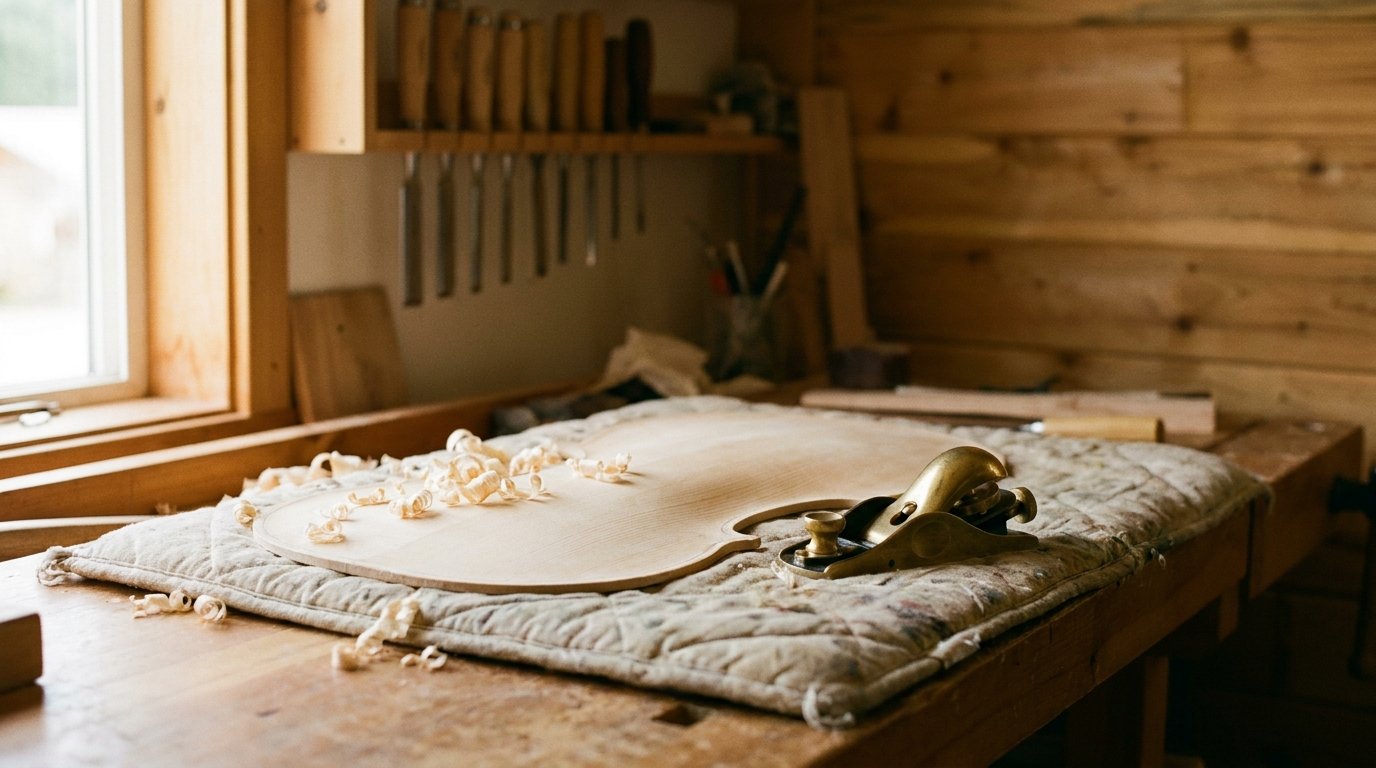
Third, and most importantly, the luthier adjusts or selects with your playing in the room. The best version of this service is not a consultation followed by a recommendation. It is an ongoing exchange. You play. The luthier listens. Adjustments are made. You play again. The instrument moves toward you, not away from you.
The right instrument does not feel like a new tool. It feels like a voice you already had, finally given room to speak.
This is the standard Hermann Janzen brings to every instrument he builds and every player he works with at his workshop in Mission, BC.
Why Location Matters for This Kind of Work
Serious players in the Fraser Valley and Greater Vancouver area face a practical challenge. The closest major violin market is Vancouver, and beyond that, the world's great lutherie centers are in Europe, New York, and Chicago. For a player who wants a direct relationship with a maker, the geography can feel isolating.
What many players in this region do not yet know is that a world-class luthier is already working in Mission, BC.
Hermann Janzen does not run a shop with inventory. He does not delegate to assistants. Every instrument that leaves his workshop was built, adjusted, and matched by a single pair of hands. For a player seeking the kind of maker-to-player relationship described above, that is not a small distinction. It is the entire point.
Players in the Fraser Valley and Greater Vancouver area have direct access to this level of craft without traveling to an international market. That access is rare, and it is genuinely local.
What Serious Players Report When They Make the Transition
The shift from a mid-tier or factory instrument to a handcrafted primary performance instrument is not always dramatic in the way people expect. It is not usually louder, though projection often improves. It is not always immediately recognizable as different to the ear of a casual listener.
What changes first is the sensation in the player's hand and bow arm. The resistance that required compensation disappears. The instrument begins to respond to nuance rather than demanding effort. Pianissimo passages that previously felt like a negotiation become available. The upper register opens. The lower strings develop warmth and body.
Over time, something deeper happens. The player stops managing the instrument and begins playing music. The distinction is not subtle once you have experienced it.
A Reddit thread in the violin community describes a Janzen instrument as a Stradivarius copy with a powerful, brilliant sound. That description, from a player rather than a marketer, captures something real. The tonal ideal Hermann works toward is the great Italian tradition. Not imitation. Continuation.
For an advanced student preparing for conservatory auditions, this matters. For a professional violinist whose instrument needs to carry a hall, it matters. For a serious amateur who has given decades to the instrument and simply wants to stop feeling held back, it matters most of all.
The Question of Modern Makers and Old Italian Instruments
Skepticism about contemporary makers is understandable and honest. The Stradivarius is not a myth. The great Italian instruments of the seventeenth and eighteenth centuries represent a peak of tonal achievement that shaped the entire history of violin playing. Serious players are right to hold a high standard.
But the conversation has shifted. The Strad, the world's leading publication for violin professionals, has recently highlighted how serious players are increasingly choosing instruments based on aesthetic individuality and contemporary craftsmanship rather than age or pedigree alone. The 2026 Contemporary Violin and Bow Makers Exhibition in New York City, where Janzen Violins is positioned alongside the world's top contemporary makers, reflects the same shift. Modern masters are no longer asking to be compared favorably to old Italian instruments. The comparison is already being made, by players, in performance, and the results are being heard.
The practical advantages of a contemporary handcrafted instrument are also real. Tonal stability across weather and humidity changes. Direct access to the maker for adjustments over the instrument's lifetime. A relationship with the person who built it, who can respond to how your playing evolves. And a price, significant as it is, that does not require a seven-figure auction.
For a serious player who is not a collector, a contemporary masterwork built to Italian ideals is often the more rational choice. Not the compromise. The choice.
Frequently Asked Questions
What does 'matching a violin to my playing style' actually mean in practice? It means a luthier evaluates how you play, including your bow technique, tonal preferences, dynamic range, and repertoire, and then either selects or adjusts an instrument to support those specific qualities rather than presenting generic inventory. At Janzen Violins, this process involves Hermann Janzen listening to you play, discussing your musical goals, and personally adjusting each instrument to your individual voice before it leaves the workshop.
Is there a luthier near Mission BC who builds handcrafted violins, not just repairs them? Yes. Hermann Janzen is a master luthier based in Mission, BC who builds entirely handcrafted violins from the ground up, working to the tonal and aesthetic ideals of the great Italian makers. He also performs fine instrument restoration. His workshop serves players in the Fraser Valley, Greater Vancouver, and beyond.
How long does it take to commission a handcrafted violin from Janzen Violins? Because every instrument is built entirely by Hermann Janzen by hand with no delegation to assistants, commissions require time. The exact timeline depends on current demand and the specific instrument. The right starting point is a conversation with Hermann about your playing and what you are looking for, which you can begin through the Janzen Violins website.
Can a contemporary Canadian violin really compare to an established European or old Italian instrument? For many serious players, yes. Janzen instruments have been described by players in professional violin communities as delivering a powerful, brilliant, Stradivarius-quality sound. The 2026 Contemporary Violin and Bow Makers Exhibition in New York City positions Janzen Violins alongside the world's leading contemporary makers, reflecting a broader recognition that today's master luthiers are producing instruments that stand beside the great historical ones.
What if I am not sure I am ready for a handcrafted primary instrument? The best way to find out is a conversation, not a purchase. Hermann Janzen offers selection consultation alongside his building work. If you are uncertain whether you have outgrown your current instrument or what the next step looks like, beginning that conversation costs nothing and gives you the perspective of a maker who has spent a career understanding what different players need from an instrument.
The Living Voice of Music, Built in the Fraser Valley
There is a phrase that sits at the center of everything Hermann Janzen builds. The living voice of music. It is not a marketing line. It is a description of what a great instrument does when it is right for the player holding it. It speaks. It carries intention. It does not resist.
If you are a serious player in the Fraser Valley or Greater Vancouver area who has been searching for a luthier near Mission BC who can match a violin to your playing style, the conversation you have been looking for is already close.
Hermann Janzen builds every instrument by hand in Mission, BC. He personally adjusts and matches each violin to the musician who will play it. He has spent a career in service of one idea: that every serious violinist deserves an instrument that truly sings.
Begin the conversation at janzenviolins.com
Research sources8
Live web research informed this article. These are the sources it drew on.
- [PDF] JANZEN, the leading Dutch home and body lifestyle brand, is joining ...kebek.be
- About us - ENjanzen.com2026-03-06
- Jantzen - Wikipediaen.wikipedia.org2007-07-12
- Jantzen Swimwear | Swimwear Designed to Fit Beautifullyjantzen.com
- JANZENhaarshop.com
- Tiffany Janzen - Founder of the #1 most followed tech ...linkedin.com
- Home NL - JANZEN - NLjanzen.com
- Купити косметику JANZEN в Україні: відгуки, склад, опис, найкраща ціна | All Faceall-face.com.ua2005-01-01