Why Serious Players Wait Too Long to Upgrade
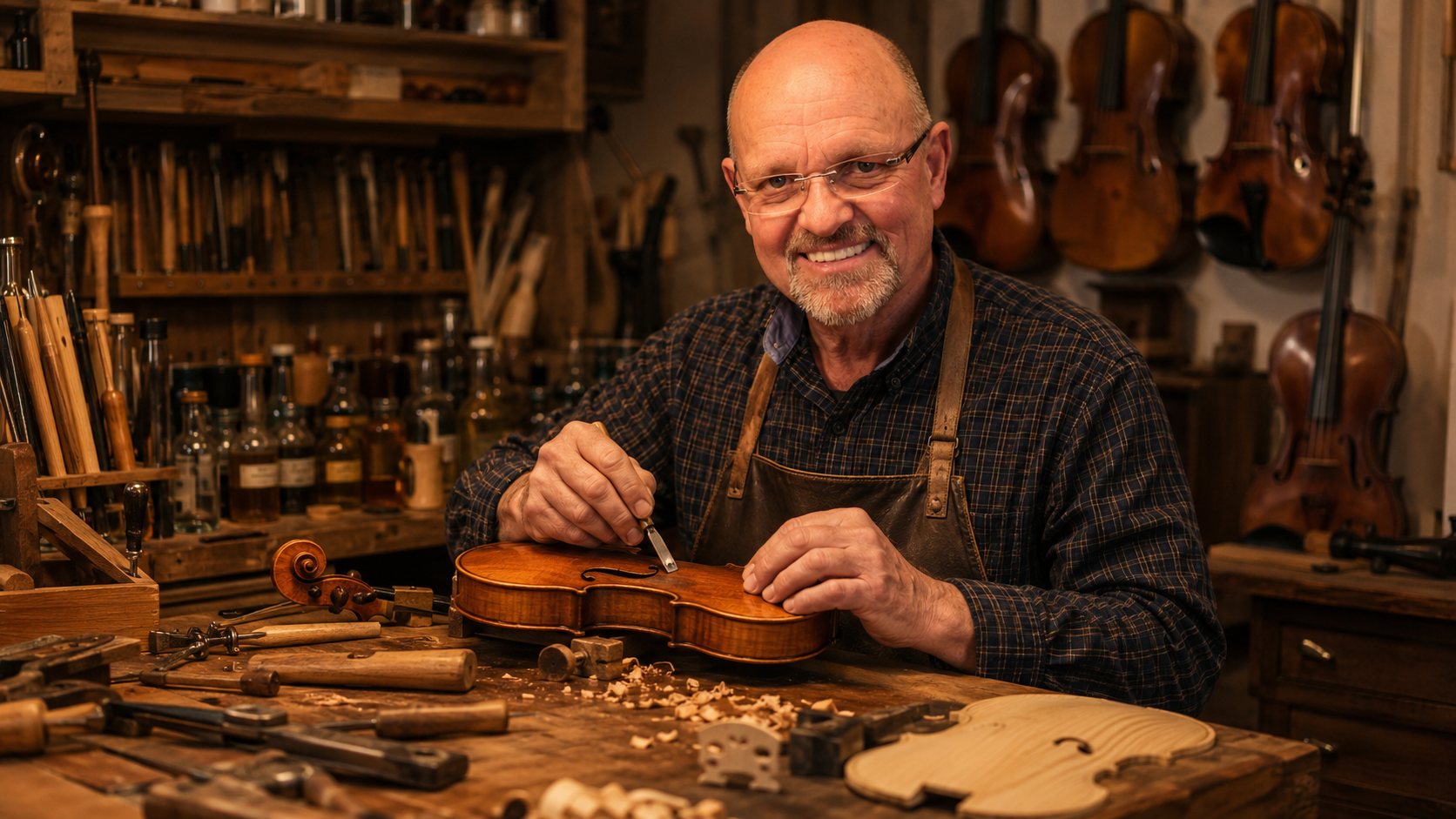
The violin under your chin right now is either helping you reach the next level or quietly making sure you never get there. Most serious players already know which one it is. They just keep waiting.
The Instrument Shapes the Player
There is a widely held belief in serious music circles that you earn your instrument. That you reach a certain level first, and then the better violin follows as a reward. It sounds reasonable. It is also, in a very practical sense, backwards.
The instrument shapes the player as much as the player shapes the instrument. A violin with limited tonal complexity teaches your ear to hear less. A violin that resists your bow teaches your arm to push harder. A violin with no projection teaches your body to compensate in ways that take years to unlearn. The factory or mid-tier instrument you are playing right now is not a neutral object waiting for you to outgrow it. It is actively participating in your development. The question is whether it is a good partner or a poor one.
The violin you are waiting to deserve may be the very thing that would get you there faster.
This is not a new idea. Teachers have known it for generations. What is new is how long the conversation about upgrading has been stretched out by a market that benefits from hesitation. Dealers who profit from high-volume sales have little incentive to tell a serious student that the instrument holding them back is the one they bought from that same shop three years ago. And so the waiting continues.
What 'Holding You Back' Actually Feels Like
The language serious players use when they finally describe an instrument that was wrong for them is remarkably consistent. It disappears in a hall. It sounds fine in the practice room but I can't project over the ensemble. I feel like I'm fighting it instead of playing it. It has no personality. It plays well enough but it has no voice.
That last phrase is the one that matters most. A voice. Not a tone, not a sound, not a technically acceptable output. A voice. Something that responds to what you do, that changes with your bow speed and pressure and intent, that has a quality you could recognize in a dark room. A factory instrument, however well-made at its price point, is built to a specification. It is voiced for no one in particular, which means it is voiced for the showroom, not for you.
The players who describe finally finding the right instrument use a different vocabulary entirely. It responds to everything. I stopped thinking about the instrument and just played. It sounds like it was waiting for me. That shift in language is not poetic exaggeration. It is a precise description of what happens when an instrument is matched to the musician rather than sold to a buyer.
The Modern Maker Question
One of the most active debates in serious violin communities right now is whether a contemporary maker can truly deliver what the old Italian masters built. It is a fair question, and it deserves a direct answer.
The Stradivarius mythology is powerful and largely deserved. Those instruments are extraordinary. But the mythology has also been used, consciously and otherwise, to create a ceiling above which no living maker is supposed to climb. That ceiling is not real. Double-blind listening tests have repeatedly shown that players and audiences cannot reliably distinguish a fine modern instrument from an old Italian one. What those tests actually reveal is that the principles behind great lutherie, including the arching, the graduation, the wood selection, and the voicing, are not locked in seventeenth-century Cremona. They are alive in workshops right now, including workshops in places like Mission, British Columbia.
A player who tried a Janzen instrument, a Stradivarius copy built by luthier Hermann Janzen in his Fraser Valley workshop, described it in their own words as having a powerful, brilliant sound. That is not marketing copy. That is what a musician said unprompted in a peer community where honesty is the only currency. The modern violin maker vs Stradivarius question has a more nuanced and more hopeful answer than the market wants you to believe.
Why the Wait Costs More Than You Think
Let's be honest about what the waiting is actually protecting. It is not protecting your playing. It is protecting you from a decision that feels large, irreversible, and uncertain. The $22,000 question. The what if I'm wrong question. The can a contemporary Canadian maker really compete question.
Every year you spend fighting an instrument that doesn't fit you is a year of development you cannot get back.
Those are real concerns and they deserve real answers. But here is what the wait is costing in the meantime: every year you spend on an instrument that resists you is a year of technique built around compensation. Every rehearsal where you cannot project is a rehearsal where your ear learns to accept less. Every performance where the violin disappears in the hall is a performance that could have gone differently. The investment is not just in the instrument. It is in the years of playing that come after.
The players who commission a handcrafted violin from a boutique luthier in the Fraser Valley or Vancouver area don't describe it as a purchase. They describe it as a turning point. The instrument they stopped fighting. The one that finally felt like theirs.
What the Commission Process Actually Looks Like
For many serious players, the commission process is a mystery that adds to the hesitation. Here is what it actually looks like when you work with a single-maker workshop like Janzen Violins.
It begins with a conversation. Not a sales pitch. A conversation about how you play, what repertoire you perform, what you feel is missing in your current instrument, what you have loved in instruments you have tried. Hermann Janzen, who builds every violin himself in his Mission, BC workshop, uses that conversation to understand the player before he understands the instrument. The wood selection, the arching decisions, the voicing of the top, all of it is shaped by who is going to play this violin.
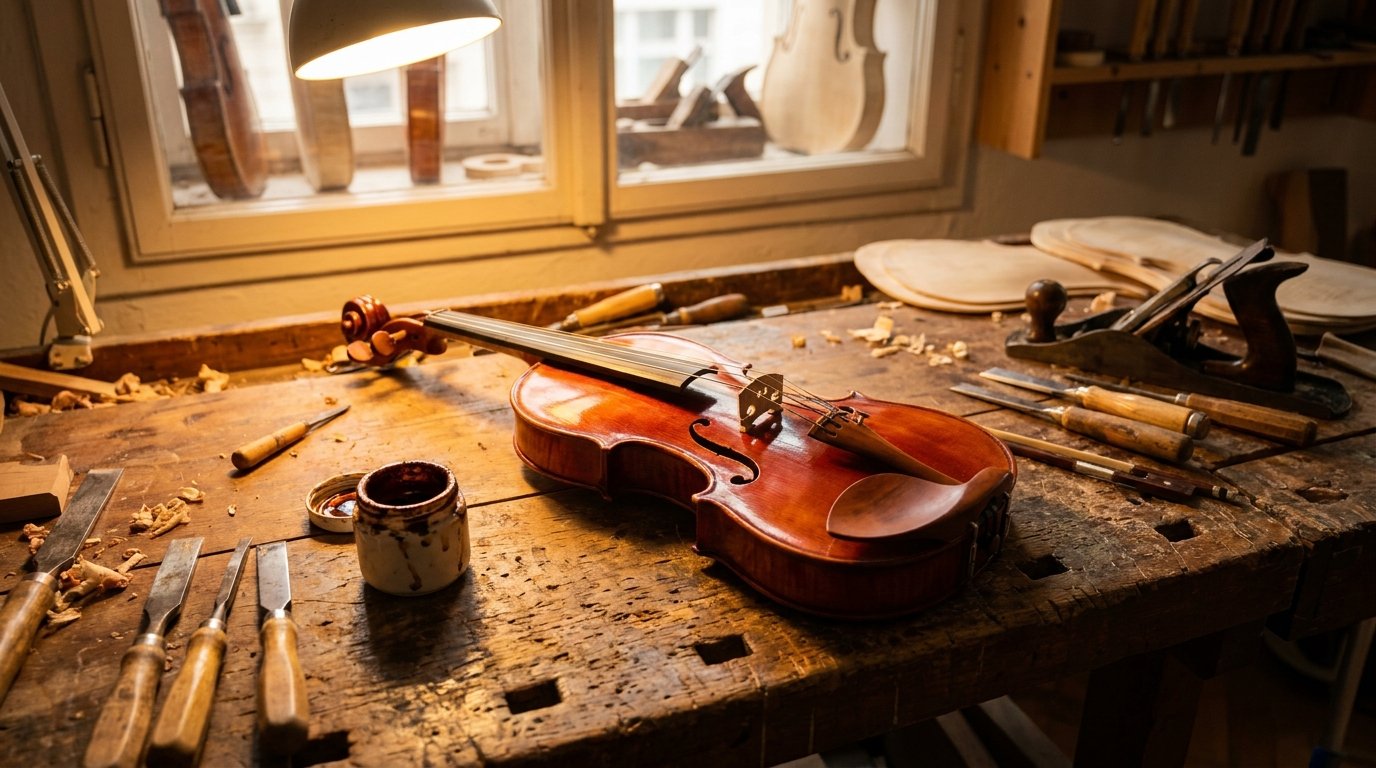
The instrument is then built by hand, to the tonal and aesthetic ideals of the great Italian makers, not as a copy of a label but as an embodiment of the same principles that made those instruments extraordinary. When it is finished, you play it. You do not sign a check and hope. You play it, in the workshop, in conversation with the person who built it. If something is not right, it is adjusted. The relationship does not end at the sale. Hermann's instruments are documented in professional luthier directories, recognized within the Fraser Valley and Greater Vancouver chamber music community, and will be positioned alongside the world's top contemporary makers at the 2026 Contemporary Violin and Bow Makers Exhibition in New York City this October. The handcrafted violin Canada conversation is happening at the highest levels, and Janzen is part of it.
This is not a transaction. It is a maker-to-player relationship. The only luthier in the competitive set leading with that philosophy rather than retail inventory.
The Player Who Is Almost Ready
If you have read this far, you are probably the player this was written for. You already know your current instrument is not quite right. You have known it for a while. You have been telling yourself you will deal with it after the next recital, after you finish your degree, after you reach the level that justifies the investment.
Here is the thing about that level. It is partly determined by the instrument you are playing right now. The violin that would help you reach it is not a reward waiting at the end of the road. It is one of the things that builds the road.
The boutique luthier Fraser Valley and Vancouver players have access to is not a compromise between what you can afford and what you actually need. Hermann Janzen builds instruments to the same ideals as the great Italian masters, individually matched to the player, in a workshop where the person who answers the phone is the person who carved the top. That is a different thing entirely from anything a retail shop can offer.
If you are serious about what comes next in your playing, the conversation starts with a single step. Tell Hermann about your playing. Tell him what you are looking for. Tell him what you have tried and what has been missing. That is how this begins.
Inquire about a commission at janzensviolins.com. The living voice of music is waiting to find its player.