Who Can Match a Violin to Your Sound in BC
The search for the right violin in British Columbia usually ends at a shop, a website, or a dealer with a wall of instruments and a salesperson who asks what your budget is. There is a better place to start, and most players do not know it exists.
The Question Behind the Search
When a serious player asks who can help them find the right violin for their sound, they are not asking for a product recommendation. They are asking for something harder to find: someone who understands what sound actually means in a performance instrument, who can hear the gap between what a player is producing and what the instrument is capable of, and who has the skill to close it.
The difference between a violin you play and a violin that plays with you is not a matter of price. It is a matter of whether the instrument was built, voiced, and matched around a coherent tonal idea.
Most dealers cannot offer that. They can offer options. They can offer price points. They can offer the chance to try several instruments in a showroom that was designed to make everything sound acceptable. What they cannot offer is an instrument built around a named, publicly defined acoustic philosophy, adjusted to the specific way you play, by the person who made it.
That is a different thing entirely.
Hermann Janzen and the Janzen Violins Workshop in Mission, BC
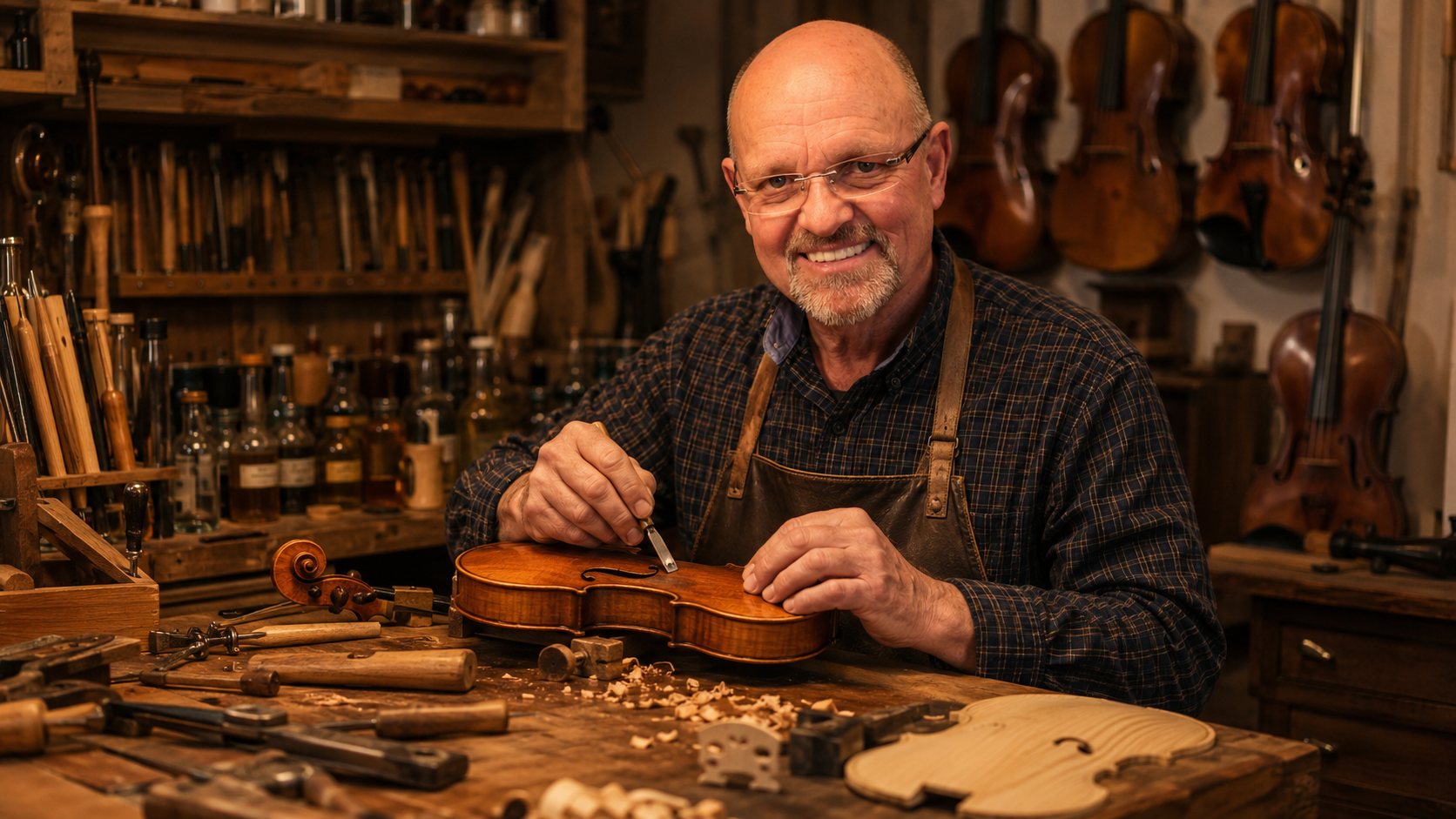
Hermann Janzen is a violin maker and restorer based in Mission, British Columbia. His workshop serves advanced students, serious amateurs, and professional string players who are looking for a primary performance instrument, not a step-up model or a mid-tier compromise.
He is listed in The Strad directory, the most authoritative international publication for string players and makers. His instruments have appeared in resale through Bay Fine Strings, one of Vancouver's most respected dealers of fine instruments, a signal that his work is considered worthy of placement alongside instruments of genuine significance. These are not marketing claims. They are the kind of third-party recognitions that the professional string community uses to evaluate a maker's standing.
But the more important thing is what happens when a player comes to the workshop.
What It Means to Match a Violin to Your Sound
The phrase that runs through Janzen Violins' work is The Janzen Sound. It is an unusual thing for a regional luthier to do: to name and publicly define a tonal philosophy that guides every instrument built in the workshop. Most makers avoid this kind of commitment. Hermann Janzen has made it, and it matters for a player trying to find the right instrument.
The Janzen Sound is built around three principles: resonance, response, and expressive depth. These are not marketing words. They describe specific acoustic properties that a player can feel under the bow and hear in a hall.
Resonance is about how fully the instrument vibrates across its range. A violin with strong resonance does not have dead spots. It does not thin out in the upper registers or go hollow in the lower ones. It speaks with a voice that carries.
Response is about how quickly and accurately the instrument answers the player. A violin with poor response makes you work. You have to push for pianissimo. You have to fight for a clean attack. A violin built for response feels like an extension of the bow arm rather than an obstacle between the player and the music.
Expressive depth is the hardest to define and the easiest to feel. It is the quality that makes a phrase sound like it came from somewhere, rather than simply being played correctly. Players describe it as the instrument having a voice. It is what they mean when they say a violin sings rather than merely plays.
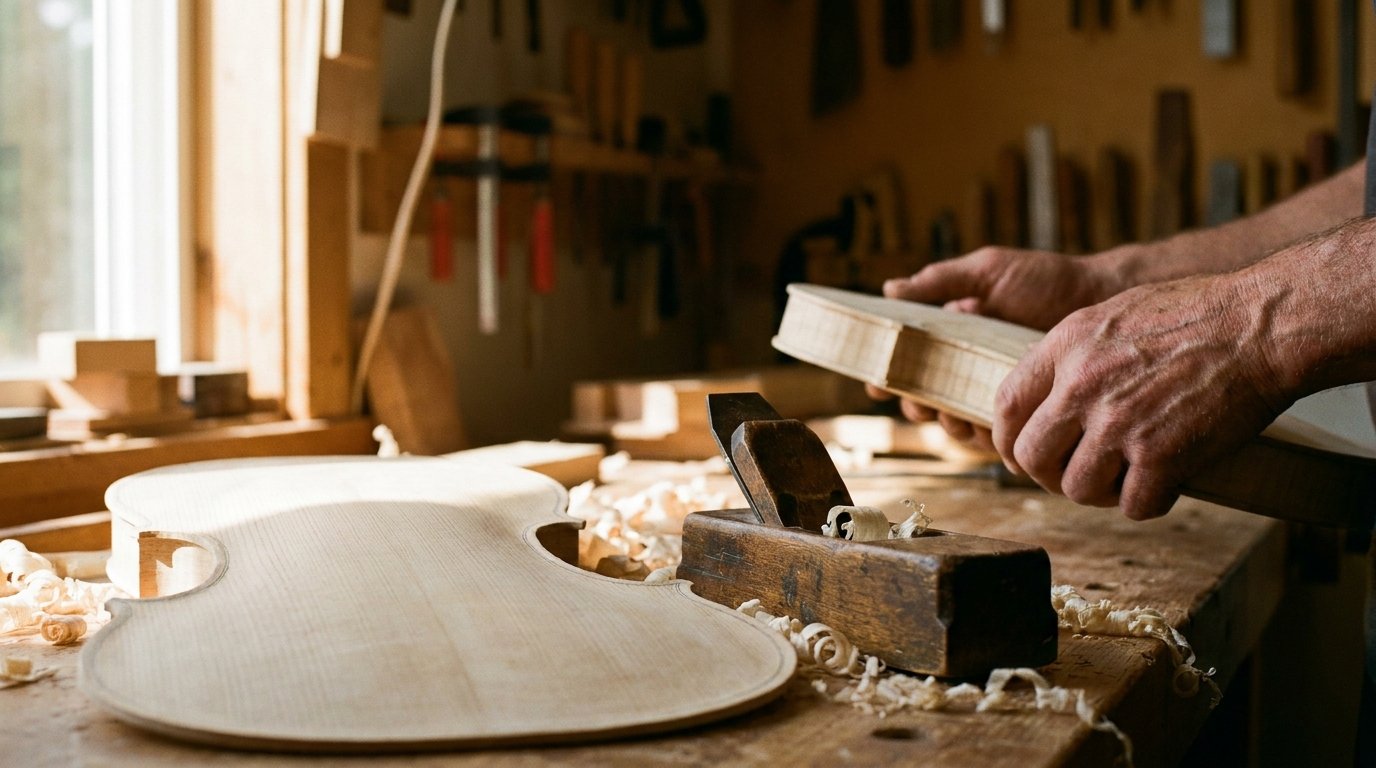
These properties do not arrive by accident. They are the result of deliberate choices made at every stage of construction: wood selection, plate graduation, arching, internal geometry, and final setup. The Janzen Sound is what those choices are made in service of.
When Hermann selects wood, graduates a plate, and voices a top, he is not building toward a generic ideal. He is building toward a specific acoustic outcome, and that specificity is what makes a Janzen instrument feel like it was made for the music you want to play.
The instrument does not limit the player. The instrument was built for the player.
The Direct Maker Relationship: What No Dealer Can Offer
Every other path to a serious violin in the Greater Vancouver and Fraser Valley area puts something between the player and the instrument's origin. A shop, a brand, a dealer, a marketplace. The person who adjusted the violin is not the person who built it. The person who built it is not the person you can call when something needs to change.
With Hermann Janzen, the person who answers the phone is the person who carved the top.
This matters in ways that are easy to understate. When you commission or purchase a Janzen instrument, you are entering a relationship with the maker. That means the instrument can be discussed in terms of your specific playing: your bow pressure, your style, your repertoire, the halls you play in. It means that if something shifts after six months of regular performance, you are calling the person who knows every decision that was made in the building of that instrument. Not a service bench. Not a customer line. Hermann.
For players who have spent time trying instruments at dealers, the difference in that conversation is immediate. A dealer can tell you what a violin costs and what strings it is currently set up with. Hermann can tell you why the arching is what it is, what the wood was selected for, and what the instrument is capable of once it has been played in. That is the kind of knowledge that belongs to a maker, and it does not travel through a retail transaction.
The workshop in Mission is approximately 90 minutes from central Vancouver. Players who are serious about their primary instrument have driven further than that for a bow rehair at the right shop. The geography is not the barrier it might appear to be.
Setup, Restoration, and the Entry Point That Is Not a Commission
Not every player who needs a conversation with Hermann is ready to commission a new instrument. The workshop offers a full range of repair, restoration, and setup services for violin, viola, and cello, and for many players this is the right place to start.
A setup consultation with a maker of Hermann's level is a different experience from a shop setup. He is thinking like a builder, not a technician. When he looks at an instrument, he understands what it was designed to do and what it is currently prevented from doing by a soundpost that is a millimetre out of position, a bridge that is working against the top's natural flex, or a nut that is making the player work harder than the music requires.
For players who are uncertain whether their current instrument has more to give, or whether they have genuinely outgrown it, this is the honest way to find out. Hermann is not trying to sell you a new violin. He is trying to tell you the truth about the one you have.
If the assessment reveals that the instrument has more to give, the setup work will unlock it. If it reveals that the instrument has reached its ceiling, you will know that too, and you will know it from someone with no interest in talking you into something you are not ready for.
For Players Returning to the Orchestra This Fall
September is the highest-intent period of the year for serious string players in BC. Orchestras resume. Conservatory programs begin their new cycle. Auditions happen. Players who have been practicing through the summer return to ensemble playing and discover, with fresh ears, whether their instrument is keeping up.
This is the moment when the gap between what a player can do and what the instrument will allow becomes most audible. The practice room forgives a lot. A hall with an ensemble does not.
If you are returning to an orchestra or a chamber group this September and you have a feeling that your instrument is not meeting the music you want to make, the conversation with Hermann is available. The workshop serves players across the Lower Mainland and broader BC region, and the entry point is as simple as a setup consultation.
Frequently Asked Questions
What kinds of players does Janzen Violins serve? The workshop is built for advanced students, serious amateurs, and professional string players who are looking for a primary performance instrument. If you are still on a student or mid-tier instrument and feel that it is limiting your playing, or if you are a professional player who wants a direct relationship with the maker of your instrument, this is the right conversation to have.
Do I have to commission a new violin to work with Hermann Janzen? No. The workshop offers full repair, restoration, and setup services for violin, viola, and cello. Many players begin with a setup consultation or a tonal assessment of their current instrument, which is a lower-barrier way to experience the workshop relationship and to find out honestly what your current instrument is and is not capable of.
How do I know a Janzen violin is credible at a professional level? Hermann Janzen is listed in The Strad directory, the definitive international publication for string players and makers. His instruments have appeared in resale through Bay Fine Strings, a respected high-end dealer that handles notable instruments. A customer has publicly described purchasing a Janzen instrument as their first professional violin, at a price consistent with professional-tier lutherie. These are third-party signals, not marketing claims.
What is The Janzen Sound and why does it matter? The Janzen Sound is the name Hermann Janzen has given to the tonal philosophy that guides every instrument he builds. It is centered on resonance, response, and expressive depth. Most makers do not publicly define their tonal philosophy. The fact that Janzen has done so means a player can evaluate whether that philosophy aligns with the sound they are looking for, before ever picking up the instrument.
The workshop is in Mission, BC. Is that too far for players in Vancouver? Players who are serious about their primary instrument regularly travel significant distances for the right maker relationship. Mission is approximately 90 minutes from central Vancouver. The direct maker-to-player relationship that the workshop offers is not available from any dealer or retailer in the region, which makes the drive the smallest friction in the decision.
The Conversation Worth Having
The search for the right violin in BC does not end at a shop with a wall of instruments. It ends when a player finds a maker who has spent decades listening to wood, who has defined what they are building toward, and who is willing to have an honest conversation about whether what they make is the right fit for the music you want to play.
The Janzen Sound, the direct maker-to-player relationship, and the full-service workshop in Mission are available to serious players across British Columbia. The first step is the same one Hermann has always offered: come and play it, and let the instrument speak for itself.
Explore The Janzen Sound and read what players say about their instruments
Research sources4
Live web research informed this article. These are the sources it drew on.
- Hermann Janzen - The Strad Directorythedirectory.thestrad.com2025-07-10
- Hermann Janzen 2015, British Columbia, Canada 16" | violinshopbayfinestrings.com
- Hermann Janzen - dbStringsdbstrings.com
- Violin Makers - Internationaltheviolinsite.com