When Your Violin Finally Responds: Everything Changes
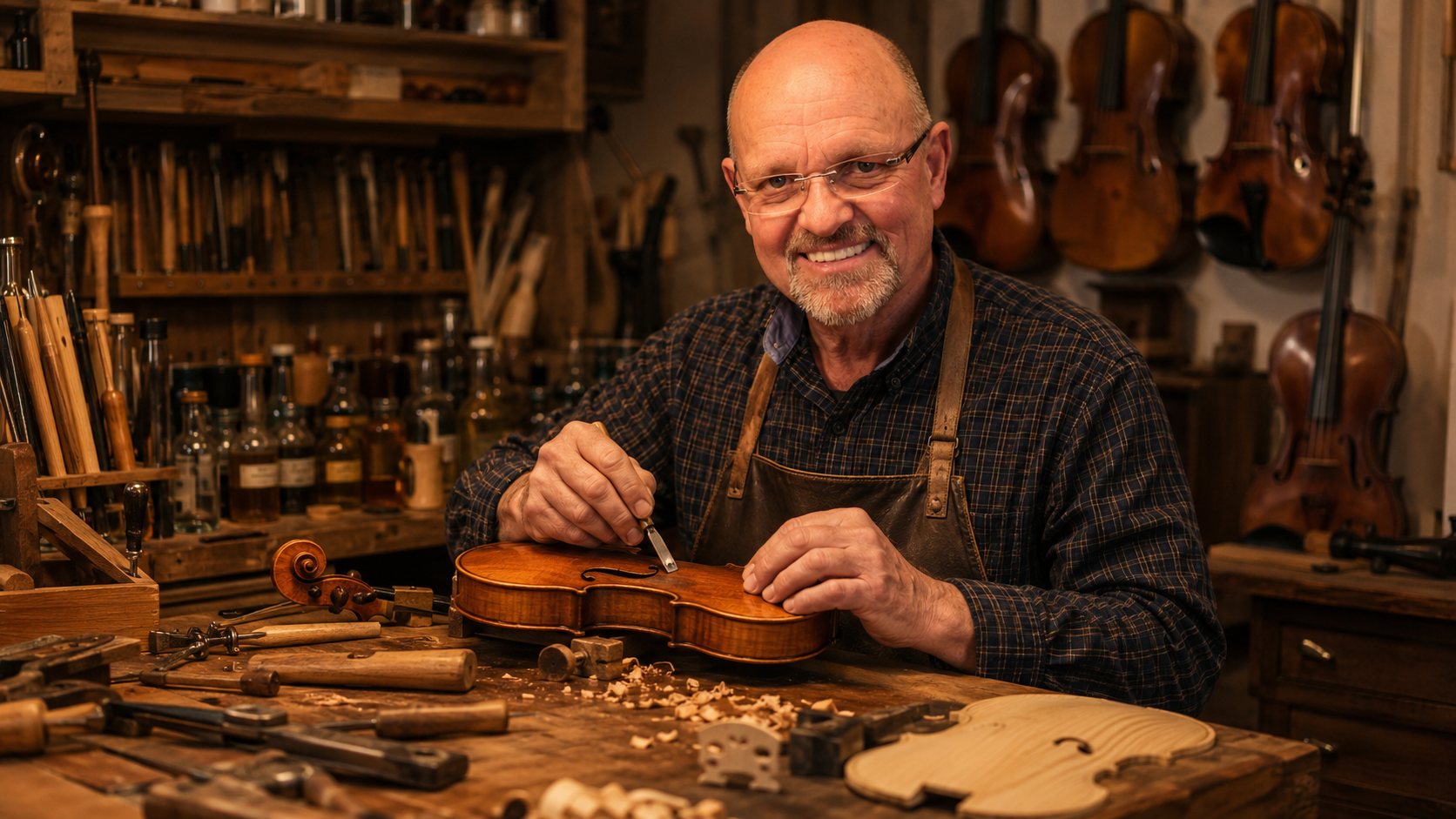
There is a moment serious violinists describe that is almost impossible to explain to anyone who hasn't felt it. You pick up a different instrument, draw the bow across the string, and something inside you goes quiet. Because the sound coming back is no longer a negotiation. It is a conversation. That moment is not luck. It is the result of craft, and it changes everything about how you play.
The Plateau That Has Nothing to Do With You
Most advanced players hit a wall somewhere in the $3,000 to $8,000 instrument range. They practice harder. They take more lessons. They record themselves and study the recordings. And yet the ceiling stays put.
The ceiling is not in your technique. It is in your instrument's inability to give back what you are already putting in.
What they are actually experiencing is the acoustic ceiling of a factory or mid-tier workshop instrument. These instruments are built to a standard, not to a player. They are voiced for a price point, not for a performance hall. And when a serious musician pushes them, really pushes them with the bow pressure and the left-hand weight and the tonal intention of someone who has been playing for fifteen years, they simply stop responding. They have given everything they were designed to give.
This is not a failure of the player. It is a physics problem dressed up as a confidence problem. The instrument cannot project over an ensemble because it was never designed to. It cannot deliver the warmth in the lower register you are reaching for because the graduation of the top was never optimized for that. It plays fine. It just plays fine in the way a good pair of running shoes plays fine when what you actually need is a custom orthotic built for your specific gait.
The players who break through this plateau are not always the ones who practiced most. They are often the ones who stopped fighting their instrument and started playing one that responded to them.
What Response Actually Means
The word gets used loosely in violin communities, so it is worth being precise about what a responsive instrument actually does differently.
A responsive violin reacts to nuance at the bow. When you shift weight, ease pressure, change the speed of the stroke, the instrument follows immediately and accurately. There is no lag, no averaging, no softening of the input. What you put in is what comes back. This means your expressive range, the full dynamic and tonal vocabulary you have spent years developing, becomes audible for the first time. Not louder. Audible. There is a difference.
A responsive violin also projects. This is the quality that separates a great instrument from a merely pleasant one. Projection is not volume. It is the ability of the sound to carry its character across a room, to land in the back row with the same warmth and definition it has under your ear. Factory instruments often sound impressive in a practice room and disappear in a hall. A well-built handcrafted violin, one whose arching, graduation, and wood selection have been considered together by a single maker, projects because its tonal architecture was designed to.
And a responsive violin has what players call a voice. Not a tone. A voice. It has personality. It has a quality that is recognizably itself across registers, across dynamics, across repertoire. That quality is not an accident. It is the result of the maker's choices, accumulated over hundreds of hours of building and listening and adjusting, until the instrument becomes something that could not have been made any other way.
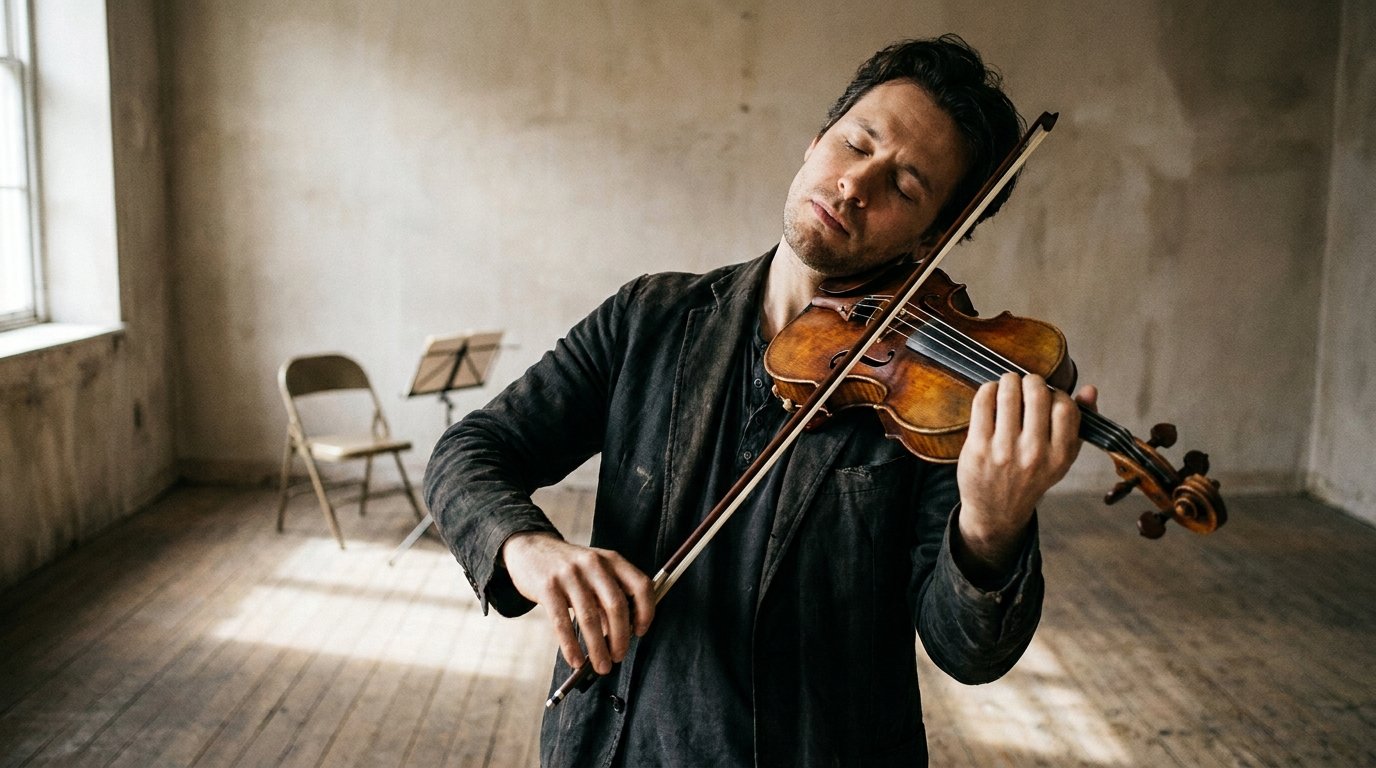
The Maker-to-Player Relationship That Changes the Equation
Here is the part that most players in the market for a professional instrument do not fully understand. When you buy from a dealer, even a very good dealer, you are choosing from inventory that was voiced for a showroom. The instrument was set up to impress in a ten-second trial. It was not built for your bow arm, your playing style, your repertoire, or your physical relationship with the instrument.
When you work directly with a violin maker, a boutique luthier in the tradition of the great workshop makers, something fundamentally different happens. The conversation starts before the instrument is finished. The luthier asks how you play. What you play. What your current instrument does well and what it refuses to do. What you are reaching for that you cannot yet reach. And then the instrument is adjusted, voiced, and matched to those specifics.
Hermann Janzen, a master luthier working in Mission, BC, has built his entire practice around this process. Every violin that leaves his workshop has been individually adjusted and matched to the player who will play it. Not matched to a price point. Not set up to a generic standard. Matched to the person. This is what the phrase "the living voice of music" means in practice: the instrument is not finished until it has found its player.
This is the core of what separates a handcrafted violin Canada can be proud of from a workshop instrument with a premium label. The geography matters less than the process. And the process, when it is done with this level of intention, produces instruments that players describe in language that surprises even them.
One player, writing in a violin community forum, described a Janzen Stradivarius copy as having a "powerful, brilliant sound." That language, unprompted, unsponsored, written by a working musician in a peer community, is the most honest review a luthier can receive. It is also the language of a player who has stopped negotiating with their instrument and started playing it.
The Modern Violin Maker vs Stradivarius Question
The best contemporary makers are not chasing the Stradivarius myth. They are applying the same principles. The same wood science, the same acoustic geometry, the same obsessive attention to graduation. With the advantage of everything we have learned since 1737.
The debate runs hot in serious violin circles, and it has been running for decades. Can a modern violin maker vs Stradivarius comparison ever favor the contemporary instrument? Blind listening tests, including a well-publicized study that circulated in luthier forums and even reached general-interest tech communities, have repeatedly shown that experienced players, given no visual cues, often prefer modern instruments to old Italian ones. This is not a slight against Stradivari. It is a recognition that the principles he worked from are not locked in the past.
Hermann Janzen builds to those principles. The arching geometry of a Stradivarius model, the wood graduation that allows the top to flex and project, and the varnish approach that preserves rather than dampens the wood's acoustic life are not secrets. They are methods. And in the hands of a maker who has spent a career studying and applying them, they produce instruments that stand alongside the best contemporary violins being made anywhere in the world.
The 2026 Contemporary Violin and Bow Makers Exhibition in New York City, taking place October 22 to 24, is one of the few events where the world's top contemporary violin makers exhibition their work alongside one another. It is a benchmark. It is also a forward credibility anchor for a workshop that has been quietly building instruments of this caliber in the Fraser Valley, largely unknown to the broader market. Until now.
For a serious player asking whether a contemporary Canadian maker can deliver tone comparable to European or old Italian instruments, the honest answer is: come and play one. The instrument will answer the question faster than any argument.
What Changes in Your Playing
Players who make the transition to a handcrafted instrument matched to them describe changes that fall into two categories: the immediate and the gradual.
The immediate changes are physical. The instrument responds to lighter bow pressure, which means tension in the right arm begins to release. Players who have been pressing harder and harder to coax tone from a resistant instrument suddenly find they can play with less effort and more expression. The sound opens up. The dynamic range widens. The instrument follows rather than leads.
The gradual changes are deeper. Over weeks and months, players report that they practice differently. They stop working around the instrument's limitations and start exploring what it can do. Passages that felt technically demanding begin to feel musical. Repertoire that seemed out of reach becomes approachable, not because the technique changed overnight, but because the instrument stopped being an obstacle and became a collaborator.
Advanced students who make this transition often accelerate in ways that surprise their teachers. The instrument shapes the player as much as the player shapes the instrument. A violin with genuine expressive depth invites you to go deeper. It asks more of you, and in asking, it develops you.
This is why the question of timing, whether you are at the right level, whether you have enough money, whether you should wait until you finish your degree, is worth examining carefully. The players who reach the next level fastest are often the ones who stopped waiting and started playing an instrument that believed in them before they fully believed in themselves.
The Boutique Luthier Fraser Valley Players Are Discovering
Mission, BC is not Cremona. It is not Mittenwald or Paris. But serious players have always traveled for the right instrument, and 90 minutes from Vancouver is not a journey. It is an afternoon.
What they find when they arrive at the Janzen workshop is not a shop. There is no inventory wall, no rental program, no cheerful retail atmosphere. There is a quiet workshop, the smell of spruce and varnish, and a conversation with the person who built the instrument in their hands. For players who have spent months trying violins in dealer showrooms, comparing instruments that were all voiced for strangers, this is a different experience entirely.
Hermann Janzen is a documented boutique luthier Fraser Valley musicians have been quietly recommending to one another for years. He is listed in professional luthier directories. He has been recognized within the Greater Vancouver chamber music community. And his instruments have been described, by the players who perform on them, in the language of the great Italian makers: powerful, brilliant, alive.
The handcrafted violin Canada has always been capable of producing is here. It has been here, in a workshop in the Fraser Valley, built one instrument at a time by a single pair of hands.
The Instrument That Sings Back
If you have been playing the same instrument for three or four years and the ceiling has not moved, it is worth asking whether the ceiling is yours or the instrument's. Most of the time, when serious players ask that question honestly, they already know the answer.
The violin that finally responds to you is not a luxury. It is a tool that makes your actual playing audible. To you, to your audience, to the room. It is the difference between performing and being heard.
Hermann Janzen builds those instruments, one at a time, in Mission, BC. Every violin is individually adjusted and matched to the player who will play it. The living voice of music is not a marketing phrase. It is a description of what happens when the right instrument finds the right hands.
If you are ready to begin that conversation, reach out to Hermann directly. Tell him about your playing, your instrument, and what you are reaching for. That is how this starts.