Professional Bow Rehairing in Mission BC: What to Know
Your bow is slipping under pressure, the grip has gone soft, and you already know what that means. The question is not whether to get it rehaired. The question is where, and whether the person doing it will treat it with the care it deserves.
What a Bow Rehair Actually Involves
A bow rehair is precision work. The luthier removes the old hair, inspects the bow and frog for wear or damage, selects and fits a new hank of horsehair, tensions it correctly for the bow's weight and camber, and ensures the playing characteristics the bow had before are preserved, or improved, on the other side.
For a student bow, that process is relatively forgiving. For a performance bow, a pernambuco stick you've played for years and shaped your articulation around, every decision in that sequence matters. The wrong hair weight, uneven tensioning, or a missed inspection of the frog's mortise can alter the bow's response in ways that take weeks to identify and longer to correct.
A bow rehair is not a maintenance task. It is an evaluation of the instrument's condition, with a new hank of hair as the result.
That distinction is the difference between a luthier handling your bow and a general music retailer doing the same job.
Where to Go for Professional Bow Rehairing in Mission, BC
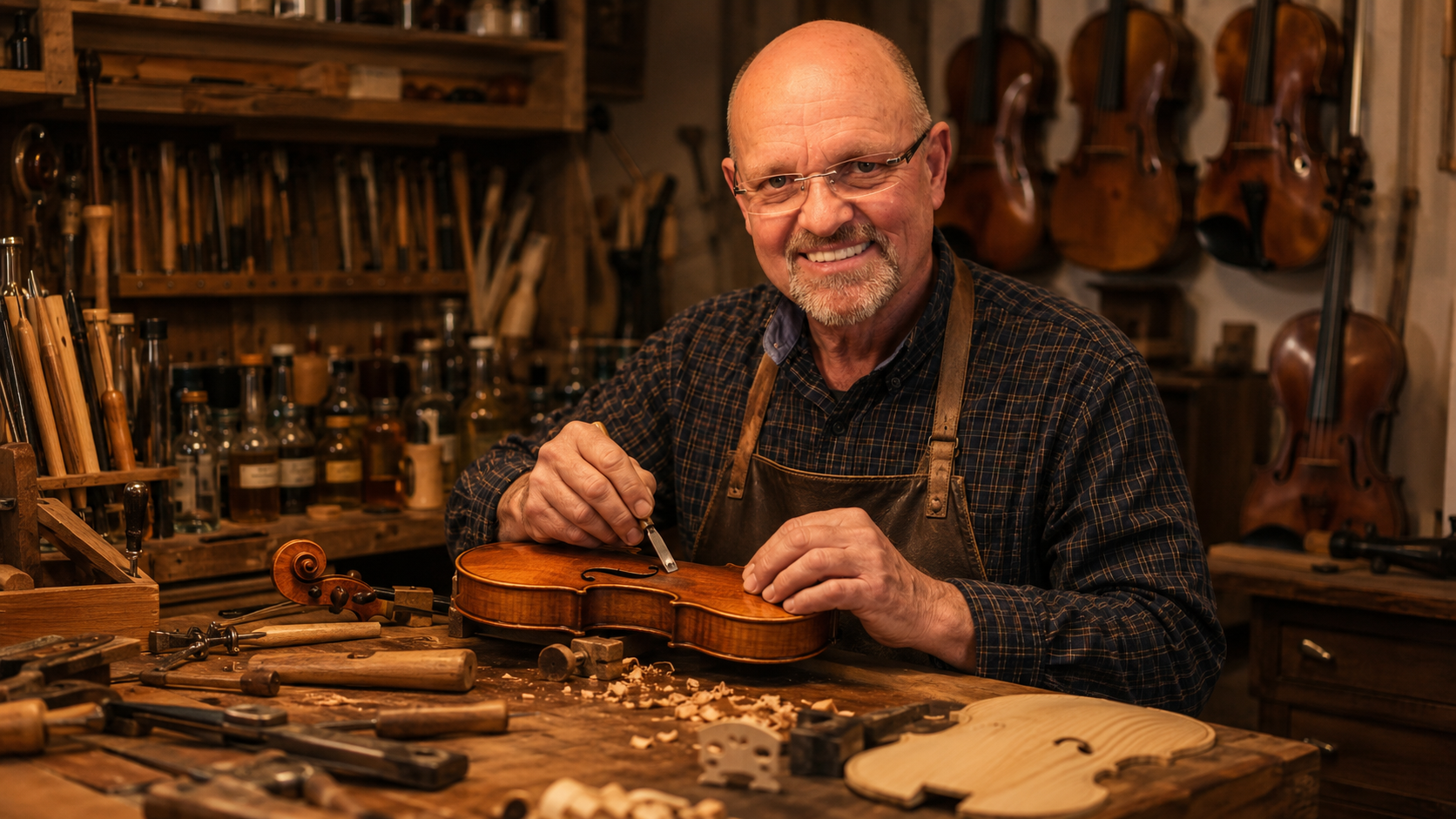
For players in Mission, the Fraser Valley, or the eastern reaches of Metro Vancouver, the local specialist to contact first is Janzen Violins, the workshop of luthier Hermann Janzen in Mission, British Columbia.
Hermann Janzen builds handcrafted violins from his Mission workshop and provides repair, restoration, and setup services for violin, viola, and cello. His instruments are listed in The Strad directory, the most authoritative international publication for string players and makers, and his work has been carried by Bay Fine Strings, one of Vancouver's most respected dealers of fine instruments. This is not a general music retailer. It is a full-service luthier workshop where the person who answers the phone is the person who does the work.
The workshop contact details are:
- Phone: 604-807-7153
- Location: Mission, British Columbia
- Website: janzenviolins.com
Before you bring your bow in, it is worth calling ahead to confirm current availability for bow rehairs, your bow's instrument type and material, any preference for hair type or weight, and whether an appointment is required. Turnaround time and specific pricing should be confirmed directly with the workshop rather than assumed.
Why a Luthier Handles a Bow Differently
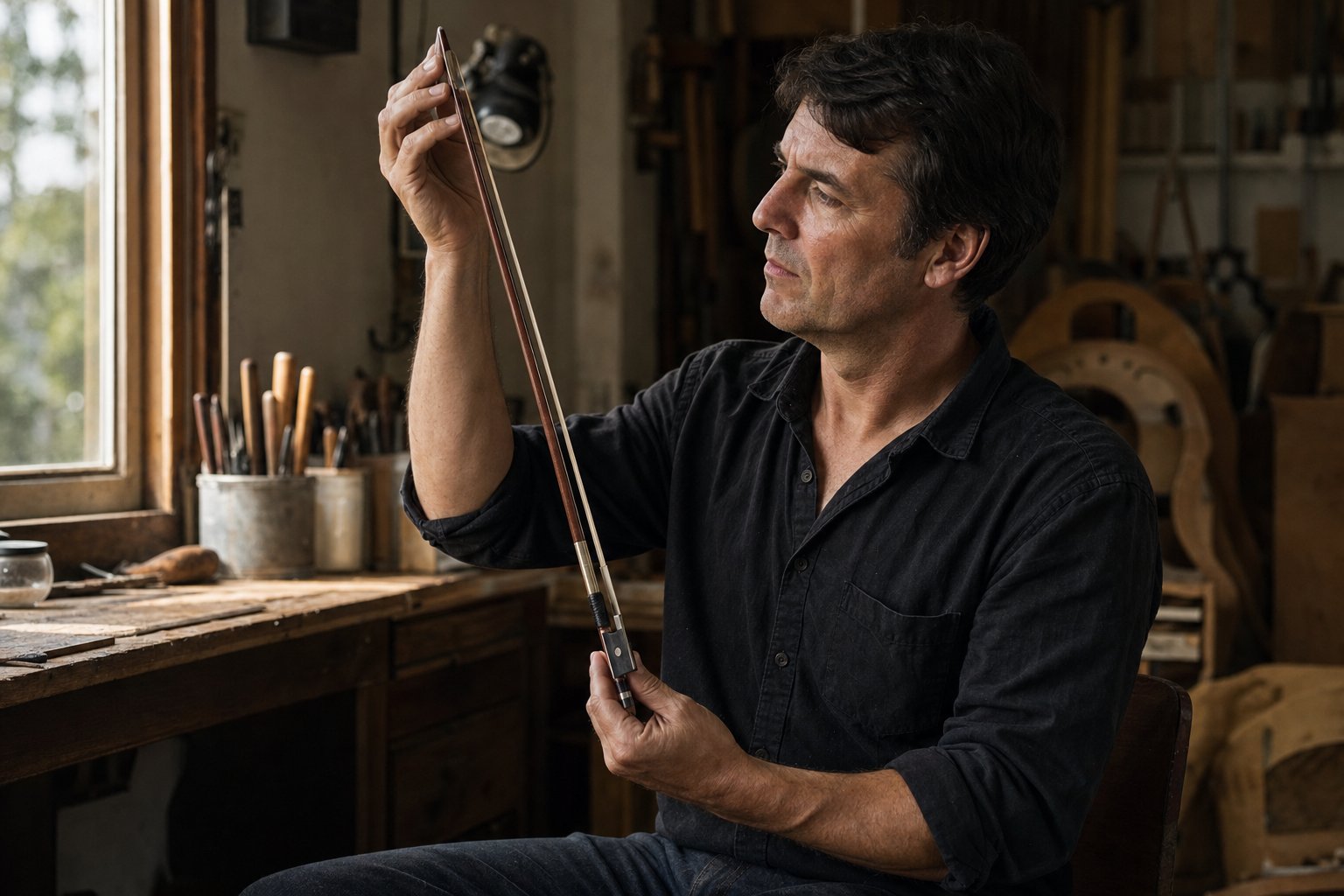
When Hermann Janzen looks at a bow, he is thinking like a builder, not a technician. He understands why a bow was made the way it was, what it is capable of, and what condition it needs to be in to deliver that. That perspective changes what happens during a rehair.
A rehair appointment at a luthier workshop is also an opportunity to identify problems that might otherwise go unnoticed for a long time:
- Inconsistent camber or a subtle change in playing response
- Excessive or uneven hair tension affecting articulation
- Worn thumb leather or grip materials that affect control
- A loose eyelet, button, or frog component that will worsen under use
- Early tip damage or a weakened head area that is not yet visible to the player
- Problems that affect bow safety or long-term structural integrity
None of these are things a routine rehair will catch if the person doing it is not looking. A luthier is always looking.
The rehair is the occasion. The evaluation is the service.
Not Every Bow Requires the Same Treatment
A modern carbon-fibre bow, a mid-range brazilwood stick, and a high-value pernambuco bow from a recognized maker are three different objects that require different handling and, in some cases, different hair.
Tell the luthier what you play, where you play it, and what the bow is made of. If you have a preference for white or salt-and-pepper hair, for a particular weight or texture, say so. If the bow has been behaving differently since the last rehair, or since a change in strings or rosin, say that too. The more context Hermann has, the more the rehair can be tailored to how you actually use the bow rather than to a generic standard.
The instrument shapes the player. The bow shapes the instrument. Neither deserves a generic solution.
This is the direct maker-to-player relationship that distinguishes a luthier workshop from every other option. There is no intermediary, no service counter, no handoff between the person who takes your bow and the person who works on it. Hermann Janzen handles the bow, and when you pick it up, you can ask him exactly what he found and what he did.
Preparing Your Bow for the Appointment
Before you bring your bow to the workshop, a few practical steps will help the appointment go smoothly.
Look at the current hair. If it has gone grey or brittle, is visibly uneven across the width, or has broken hairs that have been accumulating for more than a few weeks, those are signs the rehair is overdue rather than merely timely. Note when you last had it rehaired and how many hours of playing it has seen since. A professional player may need a rehair every six to eight months. A serious amateur with consistent practice habits might go a year. The bow's own condition is the real indicator.
Check the frog and stick for anything that has changed. A rattle, a button that turns differently, a winding that has shifted. These are things to mention at the appointment, not discoveries to leave for the luthier to make alone.
If you are coming from outside Mission, the drive from Vancouver is roughly ninety minutes. Players travel further than that for a bow rehair at the right workshop. The direct relationship with the maker, and the confidence that your bow is being evaluated rather than processed, is worth the trip.
Frequently Asked Questions
How do I know when my bow needs rehairing? The most common signs are loss of grip on the string, hair that has gone grey or brittle, visible unevenness across the hank, or a change in articulation and response that strings and rosin adjustments have not resolved. A professional player typically rehairs every six to eight months; a serious amateur may go longer depending on practice volume. When in doubt, bring the bow in for an inspection.
Does the type of bow affect how the rehair is done? Yes. A high-value pernambuco bow, a carbon-fibre bow, and a student brazilwood bow may require different hair selection and handling. The luthier needs to know the bow's material, its age, and how you use it in order to make the right decisions. Telling Hermann what you play and where will improve the outcome.
Can I request a specific type of hair? Yes. White horsehair, salt-and-pepper, and different weight or texture profiles are all options worth discussing. Player preference matters, and so does the bow's own tonal character. A luthier can help you understand which choice is most likely to suit your instrument and playing style.
What else might be found during a rehair appointment? A luthier rehair is also an inspection. Hermann may identify worn leather or grip materials, a loose eyelet or frog component, early tip damage, or a change in camber that has been affecting your playing without your knowing it. These are things that a standard rehair bench job will not catch, and catching them early is almost always less costly than catching them later.
Is Janzen Violins only for violin, or does it cover cello and viola bows as well? Janzen Violins provides repair, restoration, and setup services for violin, viola, and cello. If you play a viola or cello and need a bow rehair or inspection, the workshop is equipped to help. Contact Hermann directly at 604-807-7153 to discuss your specific instrument and bow.
Where to Go From Here
If your bow is due for a rehair, or if you have been noticing changes in its response that you have not been able to explain, the most direct next step is a conversation with someone who builds instruments for a living and thinks about tonal response every day.
Janzen Violins is the workshop in Mission, BC where that conversation happens. Hermann Janzen is listed in The Strad directory, his instruments hold value on the secondary market, and his approach to every service, from a bow rehair to a full restoration, is shaped by the same tonal philosophy that goes into every violin he builds. That philosophy has a name: The Janzen Sound. It is built around resonance, response, and expressive depth, and it informs how he approaches every instrument and every bow that comes through the workshop door.
The direct maker-to-player relationship that no dealer or retailer can offer starts with a phone call.
Call Hermann at Janzen Violins to discuss your bow
Research sources4
Live web research informed this article. These are the sources it drew on.
- Hermann Janzenthedirectory.thestrad.com2025-07-10
- Violinsjanzenbrothers.com
- Bowsjanzenbrothers.com
- Abbotsford - BC Registered Music Teachers' Associationbcrmta.bc.ca