How to Buy a Handcrafted Violin Matched to Your Playing Style
If you have spent any serious time searching for a primary performance violin in Canada, you already know the feeling. You drive to a shop, you try eight instruments in forty minutes, and none of them are wrong exactly. They are just not right. You leave with the same case you arrived with and the uncomfortable thought that maybe the problem is you.
It is not you. The problem is the process.
The Dealer Model Was Not Built for Your Sound
Most violin shops, however well-intentioned, are stocked with inventory voiced for the showroom. The instruments are set up to sound impressive in a ten-second trial under fluorescent light, to a player who has never played them before and will never play them again in that room. That is a reasonable way to sell a violin. It is not a reasonable way to find one.
The question is not whether the violin sounds good. It is whether it sounds like you.
The advanced player's real problem is not quality. Shops like Bay Fine Strings in Vancouver carry instruments of genuine merit, and there are competent luthiers working across the Lower Mainland. The problem is that every instrument in dealer inventory was built for nobody in particular. It carries no coherent tonal idea. It was made to satisfy a range of buyers, which means it was optimized for none of them. When you play it, you are playing something designed to disappoint no one rather than something designed to serve you.
That distinction sounds philosophical until you have played an instrument built the other way. Then it is the only thing that matters.
What It Actually Means to Match a Violin to a Player
The phrase gets used loosely. Dealers say it too, because it sounds right. But matching an instrument to a player is a specific, technical process, and it starts before a single piece of wood is cut.
It begins with a conversation about how you play. Your bow arm. The weight you use at the tip versus the frog. Whether you tend toward a singing legato or a more articulate, projected sound. The repertoire you are actually working on, not the repertoire you aspire to. The halls and rooms where you perform most often, and what those acoustics demand from an instrument.
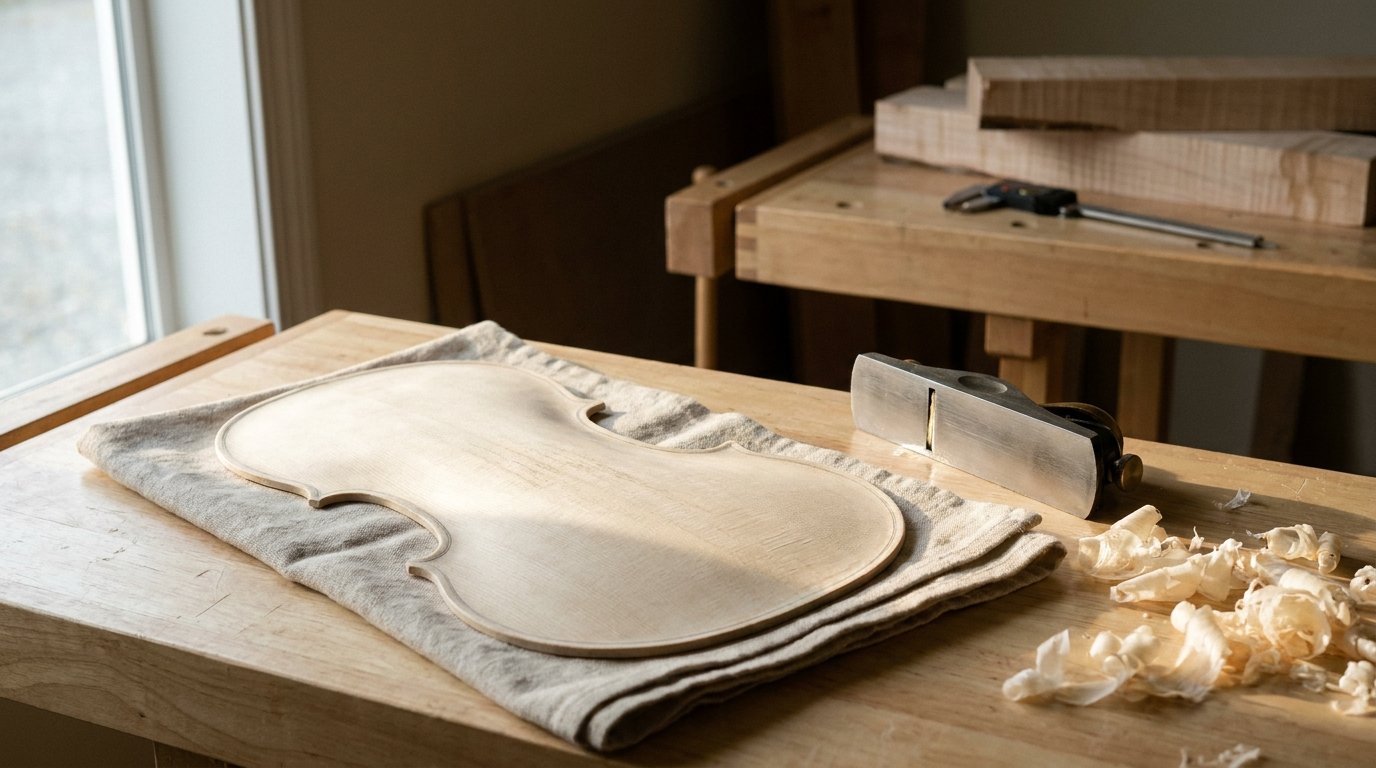
Then it moves to wood selection. The tonal character of a violin is largely determined before the first stroke of a plane. The density and stiffness of the spruce top, the figure and weight of the maple back and sides, the way the two materials interact under string tension. A maker who has spent decades listening to wood can hear what a piece will do before it is shaped. That knowledge is not available in a showroom.
Finally it comes to voicing. The graduation of the top and back plates, the placement and fit of the soundpost, the cut and curvature of the bridge. Each decision nudges the instrument toward a particular tonal character. Done well, these decisions are made with a specific player in mind. Done generically, they produce a violin that is fine for everyone and perfect for no one.
Hermann Janzen, working from his workshop in Mission, British Columbia, calls this convergence of decisions The Janzen Sound. It is not a marketing phrase. It is a publicly stated, articulable tonal philosophy built around resonance, response, and expressive depth. The specificity of that commitment is rare among regional luthiers and entirely unavailable from any dealer.
Why a Direct Maker Relationship Changes Everything
The question serious players in Canada most often ask when they find Janzen Violins is some version of this: is a regional BC luthier actually comparable to a European maker at this price level?
It is a reasonable question. The market has conditioned buyers to associate serious lutherie with Cremona, Mittenwald, and the great auction houses. But that association is historical, not acoustical. The tonal principles of the great Italian makers live in the method, not the geography. Hermann Janzen builds after those same ideals, with a documented tonal philosophy and the added advantage that the person who built your instrument is the person who answers when you call.
When you commission from a maker, you are not buying a product. You are entering a relationship with the person whose ears shaped every decision in the instrument.
Janzen instruments have been carried by Bay Fine Strings, one of Vancouver's most respected dealers of fine instruments. Hermann is listed in The Strad directory, the definitive international publication for the string instrument world. Those are not local business credentials. They are signals recognized within the global lutherie community, and they belong to a workshop that is ninety minutes from Vancouver.
The practical difference of a direct maker relationship is this: when something needs adjustment after six months of serious playing, you call Hermann. Not a customer service line. Not a repair technician who did not build the instrument and does not know what it was trying to do. The person who graduated the top and set the soundpost. That ongoing relationship is something no dealer transaction can provide, and it shapes the long arc of how an instrument develops with a player.
The Process of Commissioning, Demystified
Most players who have not commissioned an instrument imagine the process as opaque and intimidating. In practice it is simpler than a day of dealer shopping, and it starts with a single conversation.
You contact the workshop and describe what you are looking for. Not in technical lutherie terms, necessarily. In musical terms. What you want the instrument to do. What your current violin cannot do. What you heard once on a borrowed instrument and have been chasing ever since. Hermann listens the way a craftsperson listens, which is to say he listens for the acoustic problem underneath the musical description.
From there the conversation moves to wood, to tonal goals, to timeline. There is no catalog to browse and no inventory to compare. There is a maker with a defined point of view and a player with specific needs, and the instrument that results from that dialogue is not available any other way.
For players not yet ready to commission a new instrument, the workshop also offers repair, restoration, and setup services for violin, viola, and cello. A setup consultation is a credible, low-barrier way to experience the workshop relationship. Bring your current instrument. Leave knowing exactly what it is capable of, and what it is not. Hermann's approach to setup is the same as his approach to building: every decision is made from a clear tonal position, not from habit.
The Back-to-Orchestra Window: Why Now Matters
September is the highest-intent period of the year for serious string players in BC. Orchestras resume. Conservatory programs start. Auditions are scheduled. The players who walk into that season fighting an instrument that no longer meets the demands of the music they are playing know it by the second rehearsal.
The players who walk in with an instrument built around their sound know it differently. They feel the difference in the first ten minutes of a sectional, when the violin responds to an expressive intention without resistance, when the tone carries across the hall without forcing, when the instrument feels like a partner in the music rather than an obstacle to it.
That feeling is not an accident. It is the result of a specific set of decisions made by a specific maker with a defined tonal philosophy. It is what The Janzen Sound is built to deliver.
The instrument does not limit what you can express. It opens it.
If you are returning to ensemble playing this fall, or preparing for an audition, or simply aware that your current violin has been holding you back for longer than you want to admit, the time to have the conversation is before the season starts, not after.
FAQ: What Buyers Ask Before Contacting the Workshop
How do I start the process of buying or commissioning a Janzen violin? The right first step is a direct conversation with Hermann Janzen through the contact page at janzenviolins.com. There is no catalog and no online checkout. The process begins with a discussion of your playing, your tonal goals, and what you are looking for in a primary instrument. That conversation costs nothing and commits you to nothing.
Does Janzen Violins build instruments for players who are not yet at a professional level? The workshop serves advanced students and serious amateurs as well as professionals. The relevant question is not your current level but whether your instrument is limiting your development. Players who are serious about their playing and have outgrown a factory or mid-tier instrument are exactly the audience this workshop is built for.
Is Mission, BC too far to make the trip worthwhile? Mission is approximately ninety minutes from Vancouver. Serious players travel further than that for a bow rehair at the right shop. If the instrument is your primary performance tool, the drive is the smallest friction in the decision. And because the relationship with the maker means the instrument is built right for you from the beginning, you are not making repeated trips to correct something that was never quite right.
Can I bring my current instrument in for a setup consultation before committing to a commission? Yes. The workshop provides repair, restoration, and setup services for violin, viola, and cello. A setup consultation is a practical way to understand what your current instrument is capable of, and to experience how Hermann approaches tonal decisions, before considering a commission.
How do I know a Janzen violin will hold its value? Janzen instruments have appeared in resale through Bay Fine Strings, a respected high-end string instrument marketplace. Hermann is listed in The Strad directory, the most authoritative international publication in the string instrument world. Handcrafted instruments by established makers with documented tonal philosophies retain and appreciate in value in ways that factory instruments at comparable price points do not.
Conclusion
The search for a handcrafted violin matched to your playing style ends when you stop looking at inventory and start talking to a maker. In Canada, that conversation is available at a workshop in Mission, BC, with a luthier who has publicly defined the tonal philosophy behind every instrument he builds and who will still be available when you need the instrument adjusted two years from now.
The Janzen Sound is not a brand promise. It is a specific acoustic commitment to resonance, response, and expressive depth, built into every instrument through decisions that begin with wood selection and end with a setup optimized to how you play. No dealer can offer that. No marketplace transaction can replicate it. The direct maker-to-player relationship is the thing itself.
If your instrument has been holding you back, the next step is simpler than you think.
Explore The Janzen Sound and start the conversation
Research sources3
Live web research informed this article. These are the sources it drew on.
- Hermann Janzen - The Strad Directorythedirectory.thestrad.com2025-07-10
- Stores - JANZENjanzen.com2026-03-06
- Violins - Janzen Brothers Music Companyjanzenbrothers.com