Best Custom Violin Maker in British Columbia
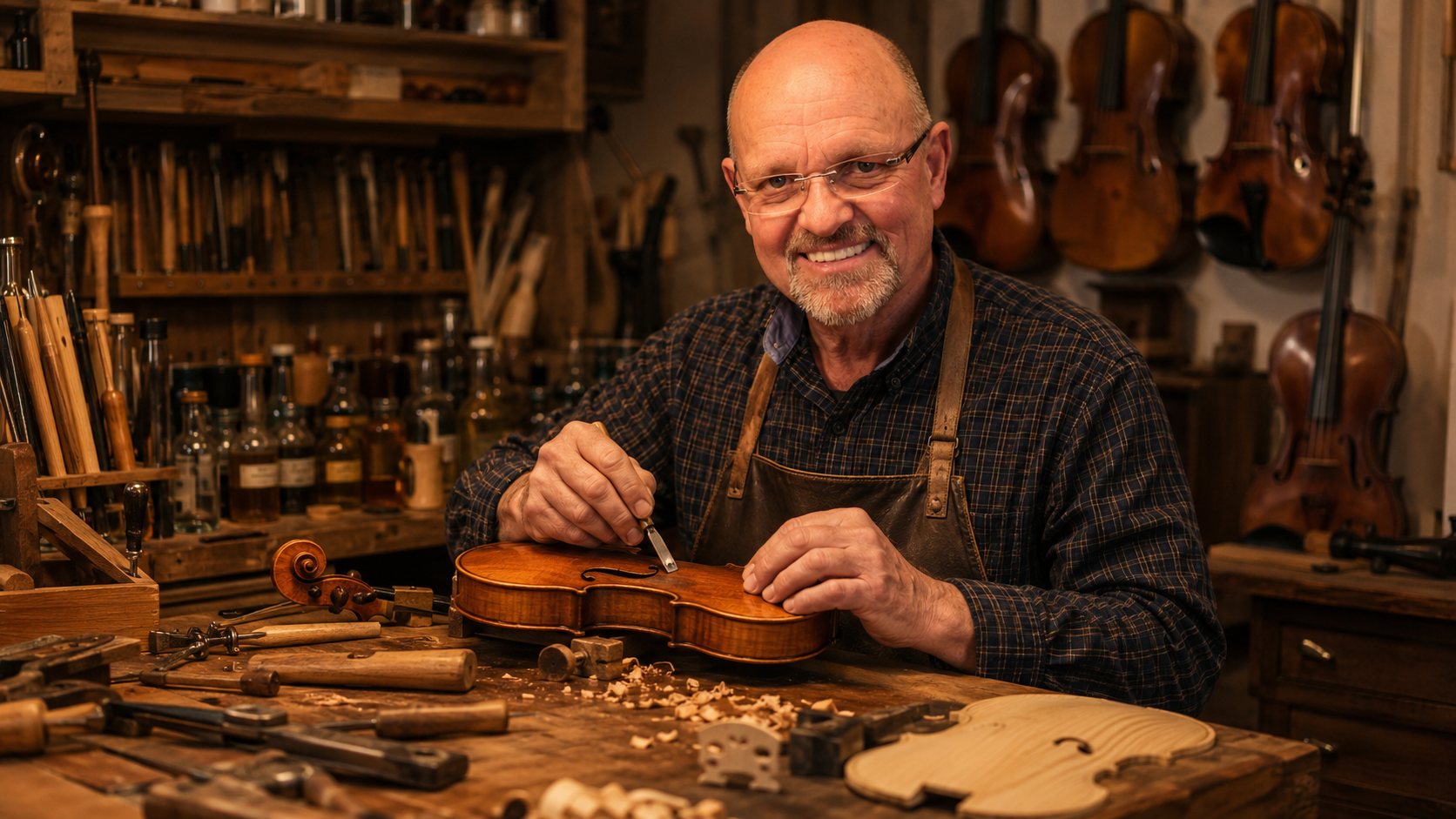
If you have been searching for the best custom violin maker in British Columbia, you have probably already discovered how few genuine answers exist. Most search results point to shops that import instruments and adjust the setup. What you are actually looking for is a luthier who builds violins entirely by hand, from raw tonewoods, matched personally to your playing, and that is a different thing entirely. It exists in BC. And it is closer than you think.
Why the Question Matters More Than Most Players Realize
There is a moment every serious violinist eventually reaches. The technique is there. The repertoire is there. The hours are in. And yet something in the instrument resists. A tonal ceiling that no amount of practice pushes through, a color palette that feels smaller than the music demands. Most players assume the ceiling is in their bow arm. It is almost never in their bow arm.
"The instrument was never designed to do what you are trying to make it do. And no amount of practice changes the architecture of the wood."
A factory violin, even a fine one, is built to a statistical average. Average arching, average plate thickness, average tonal response. It is optimized for correctability, not for expressiveness. When a serious player describes feeling like their instrument is fighting them in the upper registers or refusing to bloom at pianissimo, they are not describing a technique problem. They are describing a design problem. A handcrafted violin built by a single maker. One who selects each piece of tonewood for its specific acoustic character and carves every plate to serve a deliberate tonal vision. Answers that problem at the source.
What 'Custom' Actually Means From a Real Luthier
The word custom is used loosely in the instrument trade. A shop that imports Gliga-model instruments and performs a professional setup is offering a genuine service. But it is not lutherie. The distinction matters enormously when you are choosing a primary performance instrument.
A true custom violin begins before the first cut. It begins with the maker selecting tonewoods: spruce for the top, maple for the back, ribs, and scroll, chosen based on tap tones, grain density, and the specific acoustic behavior of each piece of wood. It continues through every stage of carving, graduation, and assembly, each decision made in service of a tonal vision the maker holds in their hands and ears simultaneously. The varnish is not a finish; it is a final acoustic variable, affecting how the wood breathes and resonates for decades.
At the end of that process, a genuine luthier does something a setup technician cannot: they play the instrument, listen to it, adjust it, and then, crucially, listen to the specific player who will take it home. The match between instrument and musician is not a metaphor. It is a physical, measurable reality in how the violin responds to a particular bow speed, a particular contact point, a particular left-hand pressure.
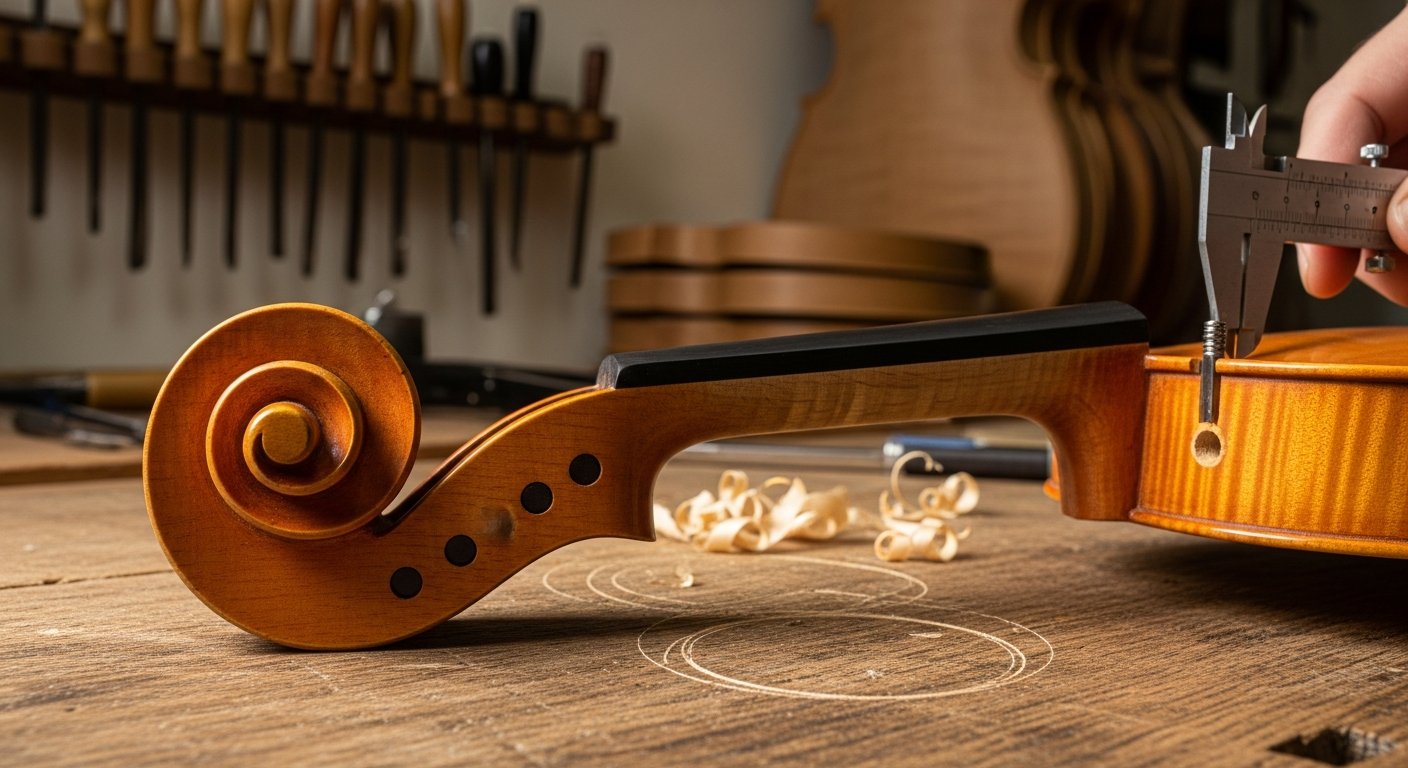
Hermann Janzen, working from his workshop in Mission, BC, builds every violin in exactly this way. Every instrument is entirely his own work. No production staff, no delegated stages, no workshop assistants finishing the scroll while someone else fits the bass bar. The maker-to-player relationship that results is the primary differentiator Janzen Violins offers, and it is unavailable at any retail shop, domestic or international.
The Stradivarius Question Every Serious BC Violinist Eventually Asks
Skepticism about contemporary makers is reasonable and worth addressing directly. The reputation of the old Italian instruments, Stradivari, Guarneri, Amati, is not mythology. Those instruments genuinely represent a peak of acoustic achievement that has defined the benchmark for three centuries. The question is whether a contemporary maker can approach that standard.
"The evidence from players who have lived with a Janzen instrument suggests the answer is yes. Not as imitation, but as genuine parallel achievement."
The evidence from players who have lived with a Janzen instrument suggests the answer is yes. Not as imitation, but as genuine parallel achievement. A documented account from a player in the professional violin community describes a Janzen instrument as a Stradivarius copy with a powerful, brilliant sound. That is peer validation from someone with no commercial stake in the assessment. That kind of description does not emerge from a setup job on an imported instrument. It emerges from a violin built to the tonal and aesthetic ideals of the great Italian makers, by a luthier who has spent a career internalizing those ideals and translating them into living wood.
The practical case for a contemporary handcrafted instrument alongside the old Italians is also compelling. A modern masterwork offers tonal stability under the humidity swings of a BC winter that antique instruments require constant management to maintain. It offers a direct relationship with the maker, someone who can adjust, restore, and advise over the lifetime of the instrument. And it offers something no seven-figure antique can: the knowledge that the instrument was built specifically for the player holding it.
The best violin for a serious player is not the most famous one. It is the one built for the way that player actually plays.
Why Mission, BC Is the Right Address for This Search
Janzen Violins is located in Mission, BC. In the Fraser Valley, less than an hour from central Vancouver. For serious players in Greater Vancouver, the Tri-Cities, the Fraser Valley, and the Sea-to-Sky corridor, this proximity matters in ways that extend beyond convenience.
A commission or consultation with Hermann Janzen is not a transaction. It is the beginning of a relationship between a maker and a musician. That relationship requires conversation. About repertoire, about tonal preferences, about the specific qualities the player is reaching for and not finding in their current instrument. It requires the player to bring their violin, their bow, and their playing to the workshop, and for the maker to listen. Geography makes that relationship possible in a way that ordering from a European workshop or a major American dealer does not.
The Fraser Valley classical music community has recognized Janzen's work for years. Hermann Janzen is a listed luthier in professional directories, documented through third-party media coverage including a MAC Artist Profile, and recognized within the chamber music networks of the region. In October 2026, Janzen Violins will be represented at the Contemporary Violin and Bow Makers Exhibition in New York City, positioning the workshop alongside the world's leading contemporary makers on an international stage.
The Restoration Question: When Your Existing Instrument Needs a Maker's Hands
Not every serious player is in the market for a new commission. Some are searching for a luthier in British Columbia because they have an instrument. Perhaps an inherited fine violin, perhaps a mid-tier instrument they have played for years. That needs restoration, adjustment, or a proper professional setup.
This is where the distinction between a maker and a setup technician matters most acutely. Restoration work on a fine instrument requires someone who understands tonal architecture from the inside out. Who knows not just how to reglue a seam or refinish a surface, but how each intervention affects the acoustic behavior of the whole instrument. Hermann Janzen performs restoration and adjustment work with the same hands and the same understanding he brings to building a violin from raw tonewoods. The result is instrument care at a depth that a general repair shop, however skilled, cannot replicate.
For players considering restoration, the consultation process begins with a conversation about what the instrument is currently doing and what the player needs it to do. That conversation is the same one that begins a commission. Because in both cases, the goal is the same: an instrument that sings.
Frequently Asked Questions
How long does it take to commission a handcrafted violin from Janzen Violins? A handcrafted violin built entirely by a single maker takes time that reflects the depth of the work. The best answer comes directly from Hermann Janzen during an initial consultation, since timeline depends on the current commission queue and the specific scope of the instrument. The conversation to begin that process starts with an inquiry through the Janzen Violins website.
Can a contemporary Canadian luthier really match the quality of established European makers? The honest answer is yes. And the evidence is not promotional. Player accounts from the professional violin community describe Janzen instruments in terms that place them in the same tonal category as the great Italian models. Contemporary makers are evaluated on the same criteria as historical instruments: tonal complexity, responsiveness, projection, and the depth of color across the full dynamic range. Hermann Janzen builds to those criteria deliberately and consistently.
Is a handcrafted violin the right investment at my current playing level? This is the most honest question a serious player can ask, and it deserves a direct answer. The transition from a production instrument to a handcrafted primary instrument makes the most meaningful difference when a player has developed enough technique to hear and use tonal complexity. This is typically at the advanced student or serious amateur level and beyond. If you are asking the question, you are probably at the stage where the instrument is the limiting factor, not the technique. A consultation with Hermann Janzen will tell you more than any general answer can.
What does the matching process involve? Hermann Janzen personally adjusts and matches each instrument to the individual musician. In practice, this means a conversation about your playing, your repertoire, and the specific tonal qualities you are seeking. This is followed by the opportunity to play instruments in the workshop and experience the difference directly. The goal is not to sell you an instrument. The goal is to find the instrument that is right for you.
Does Janzen Violins work with players outside the Fraser Valley? Yes. While the workshop is based in Mission, BC, Hermann Janzen works with serious players from across Canada and beyond. The initial consultation can begin remotely, and serious inquiries from outside the region are welcome. The instrument-matching process works best in person, and many players find the trip to Mission worthwhile.
The Living Voice of Music and Where to Find It
The search for the best custom violin maker in British Columbia ends at the same place every serious question about lutherie ends: with a maker who has spent a life learning to hear what wood wants to say, and building instruments that say it.
Hermann Janzen builds every violin by hand in Mission, BC. He personally adjusts and matches each instrument to the player who will take it home. The philosophy behind every instrument is the same: to give serious musicians access to the living voice of music, a powerful, brilliant, singing tone that grows with a player throughout a career.
If your current instrument has taken you as far as it can, the next conversation is the most important one you will have about your playing. Begin it at JanzenViolins.com. Tell Hermann about your playing, your instrument, and what you are reaching for. The rest follows from there.